


This post contains affiliate links. As an Amazon Associate, Camidan earns from qualifying purchases, at no extra cost to you. Learn more.
A small pantry fills up fast. One open bag of pasta, a few half-used snacks and a stack of cans, and suddenly you can’t find anything. The fix isn’t a bigger pantry. It’s a few simple systems: clear containers, clear labels and a smart way to reach the back corners.
Below are the pantry organization ideas that make the biggest difference in a small kitchen, plus the exact types of storage pieces we’d pick. Tap the numbered dots on the photos to see each piece.
Quick picks
Short on time? These are the pieces that make the biggest difference.

Wide-mouth glass mason jars with lids
Grains, lentils, nuts and anything you scoop a little at a time.
Check today’s price →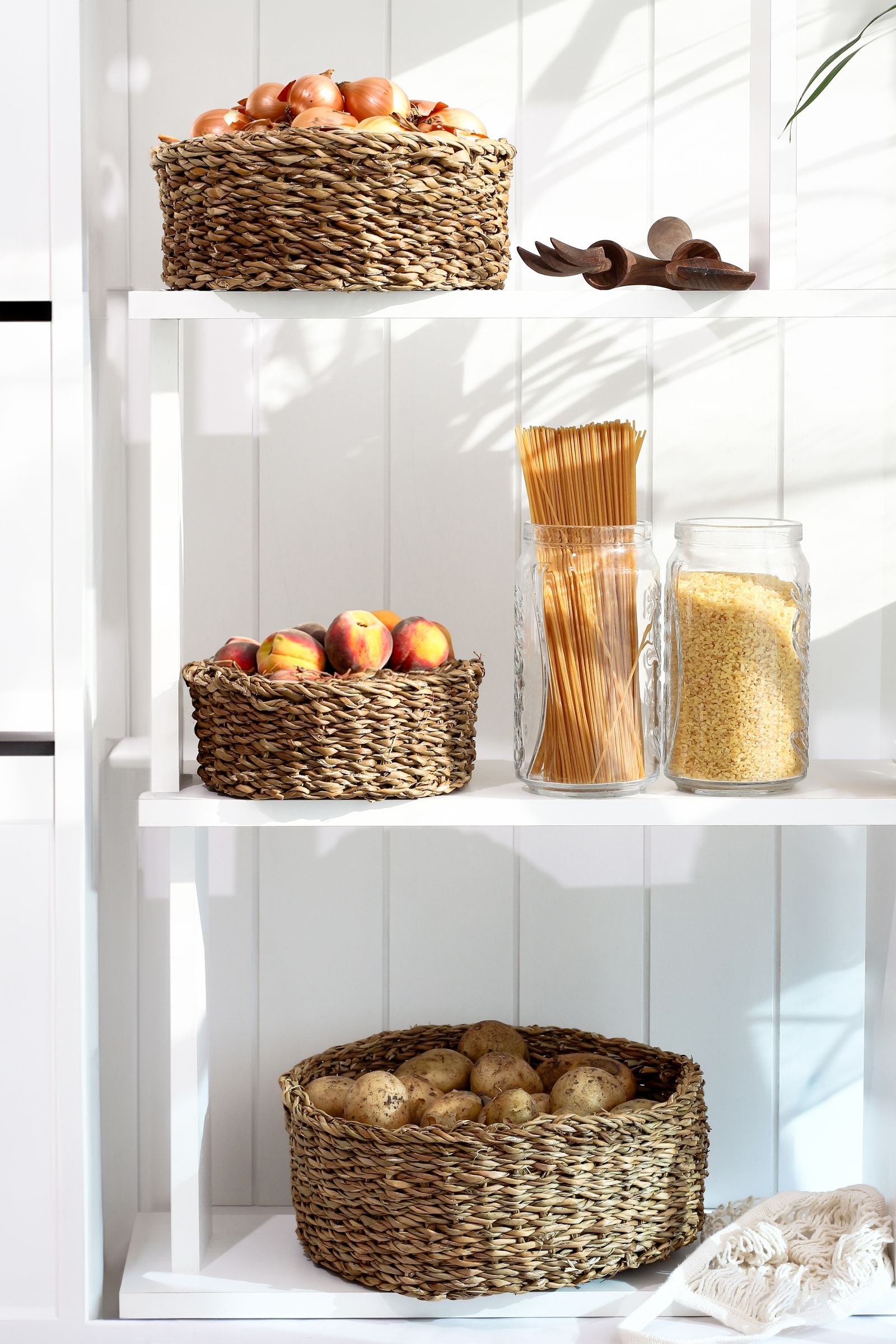
Round seagrass storage baskets
Potatoes, onions, fruit and snack packs that need air.
Check today’s price →1. Empty everything and sort by “zone”
Take everything out, wipe the shelves and check dates. Then group what’s left into simple zones: baking, grains & pasta, breakfast, snacks, cans & jars and backup stock. Zones matter more than pretty containers. Once every item has a home, the pantry stays tidy on its own.
2. Decant dry goods into clear containers
Clear containers are the single biggest upgrade. You can see at a glance when rice or oats are running low, food stays fresher, and square or straight-sided containers use shelf space far better than floppy bags.
- Glass jars for grains, lentils, seeds and nuts you use a little at a time.
- Tall pour-spout containers for cereal, pasta and anything you pour.
- Measure your shelf height first, so containers fit with a little room for your hand.
3. Use baskets for produce, snacks and odd shapes
Not everything belongs in a jar. Potatoes, onions, snack packs and oddly shaped bags are happier in open baskets. Woven seagrass baskets add warmth, let produce breathe, and slide out like drawers so nothing gets lost at the back.
4. Add a lazy Susan to the deep corners
Deep shelves and corner cabinets are where food goes to be forgotten. You reach for the soy sauce, knock over two jars, and never see the bottle of vinegar hiding at the back. A turntable solves this with one spin: everything at the back comes to the front, and nothing has to be unloaded to find it.
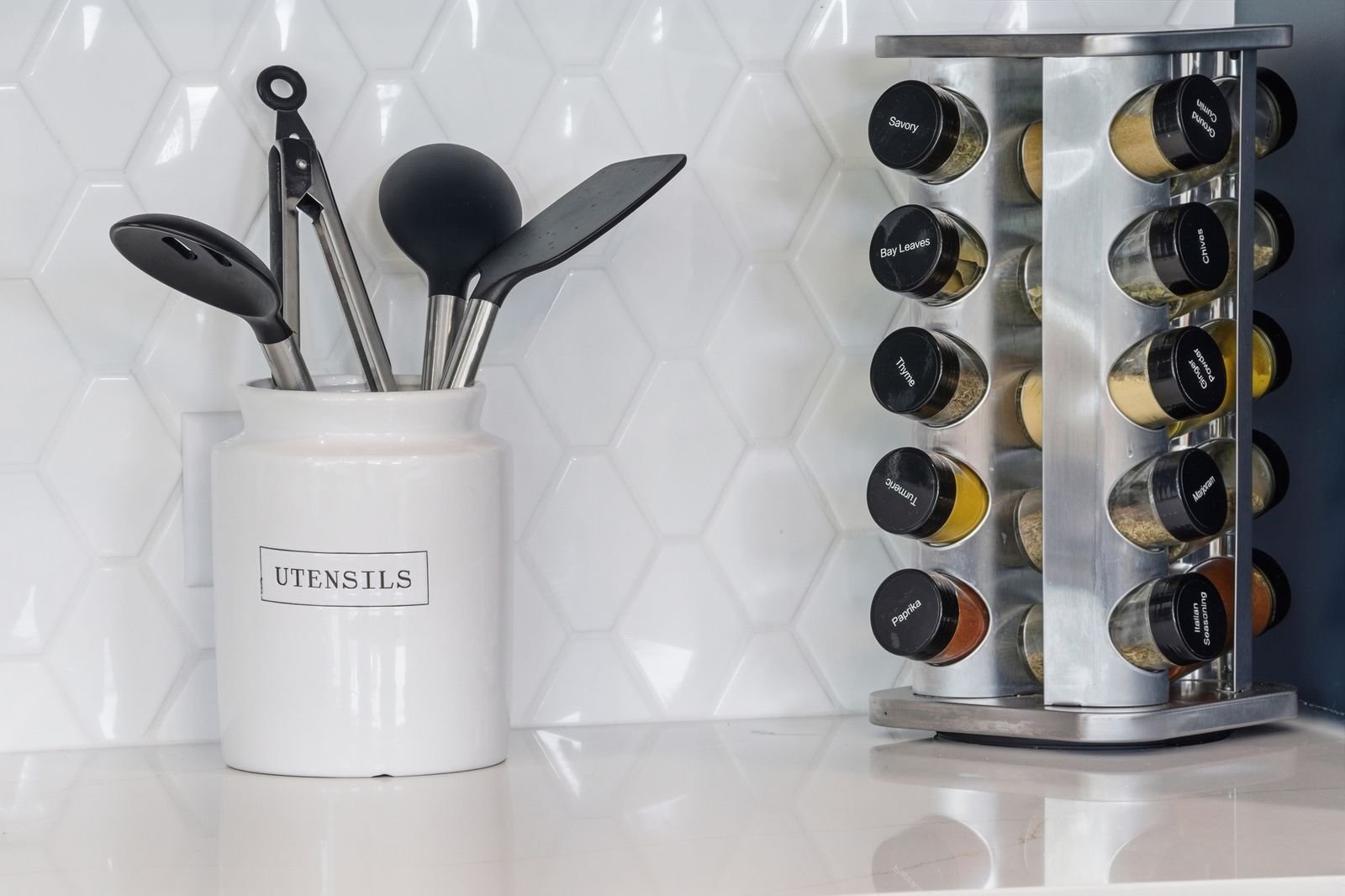
Rotating storage keeps every jar in reach.
Where a lazy Susan works best:
- Corner cabinets, where the back is almost impossible to reach.
- Oils, vinegars and sauces, which are tall, sticky and easy to tip over.
- Spices, so you can read every label without lifting jars out one by one.
- Snack bars and small packets, grouped in one place for kids (and adults).
A two-tier turntable doubles the storage in the same footprint. Measure the depth of your shelf and the height between shelves before you buy: a 10-inch turntable suits most standard pantry shelves, while 12 inches or more works for deep corner cabinets. Choose one with a raised edge so bottles don’t slide off when you spin it.
Tip: keep the heaviest bottles near the center of the turntable. It spins more smoothly and is less likely to wobble.
5. Label everything (and add dates)
Labels are what keep the system working when someone else unpacks the groceries. Without them, the oats end up in the rice jar and the brown sugar goes somewhere nobody can find. With them, everyone in the house knows exactly where things go.
Small, simple labels look calm and are easy to read.
How to label a pantry the easy way:
- Name on the front. One or two words is enough: “Oats”, “Basmati rice”, “Flour”.
- Date on the back or bottom. Write the “best by” date from the original package when you decant, so nothing goes stale unnoticed.
- Label the shelf too. A small label on the shelf edge (“Baking”, “Breakfast”) tells everyone where each zone lives.
- Stick to one style. Matching labels make even mismatched jars look intentional.
Clear or white labels with black text suit almost any kitchen. Choose waterproof ones so they survive the dishwasher or a quick wipe, and keep a few blank labels in a drawer for new items.
6. Keep a 10-minute weekly reset
Every pantry drifts back toward chaos. Bags get pushed in “just for now”, and containers run empty. The trick isn’t a big clean-out every few months. It’s a short reset right before your weekly grocery run.
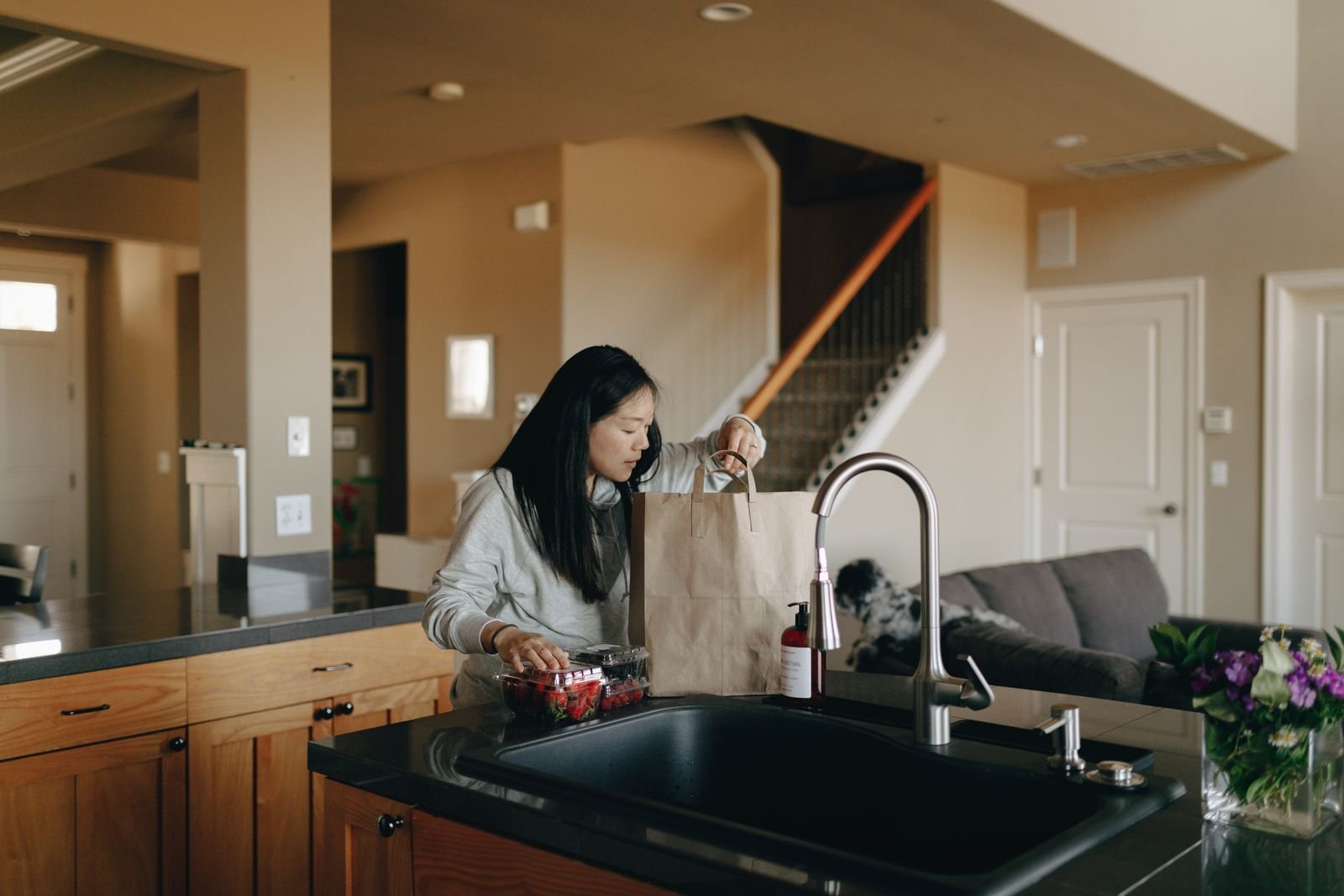
A quick reset before shopping makes unpacking easy.
Your 10-minute pantry reset:
- Minutes 1–3: pull anything out of place back into its zone.
- Minutes 4–6: refill containers from backup stock and wipe any spills.
- Minutes 7–8: move older items to the front (first in, first out).
- Minutes 9–10: write down what’s low. That’s your shopping list, done.
When you get home, unpacking takes minutes because every item already has a home. Over a few weeks, the reset becomes automatic, and that tiny habit is what keeps an organized pantry looking like the photos.
Shop the pantry: similar finds we picked
Prices change often, so we don’t list them. Check the current price and size before you buy.
1From the photo aboveWide-mouth glass mason jars with lids
Perfect for grains, lentils, seeds and nuts. Wide mouths make scooping and cleaning easy, and a matching set instantly makes a shelf look calm.
- Best for: Grains, lentils, nuts and anything you scoop a little at a time.
- Skip it if: Small kids grab from low shelves. Glass can break, so keep jars up high.
2From the photo aboveClear airtight dry food containers
Tall, straight-sided containers with pour-spout lids for cereal, pasta and rice. They line up neatly, keep food fresh and show what’s running low.
- Best for: Cereal, pasta and rice you pour every day.
- Skip it if: Your shelves are shorter than the containers. Measure the height first.
3From the photo aboveRound seagrass storage baskets
Breathable baskets for potatoes, onions, fruit and snack packs. They slide out like drawers and add natural texture to white shelves.
- Best for: Potatoes, onions, fruit and snack packs that need air.
- Skip it if: You store things that can leak. Woven bottoms are hard to wipe clean.
4From the photo aboveTall glass spaghetti jar
Keeps long pasta upright and visible instead of in a crumpled box. Look for one tall enough for full-length spaghetti.
- Best for: Long spaghetti and linguine kept upright and visible.
- Skip it if: You mostly cook short pasta. A regular canister does the job.
5From the photo aboveGlass canister with airtight lid
A good everyday canister for couscous, sugar, coffee or pet treats. An airtight seal keeps humidity and pantry pests out.
- Best for: Sugar, couscous, coffee or treats you open every day.
- Skip it if: You want something light and shatterproof. Pick a clear plastic canister instead.
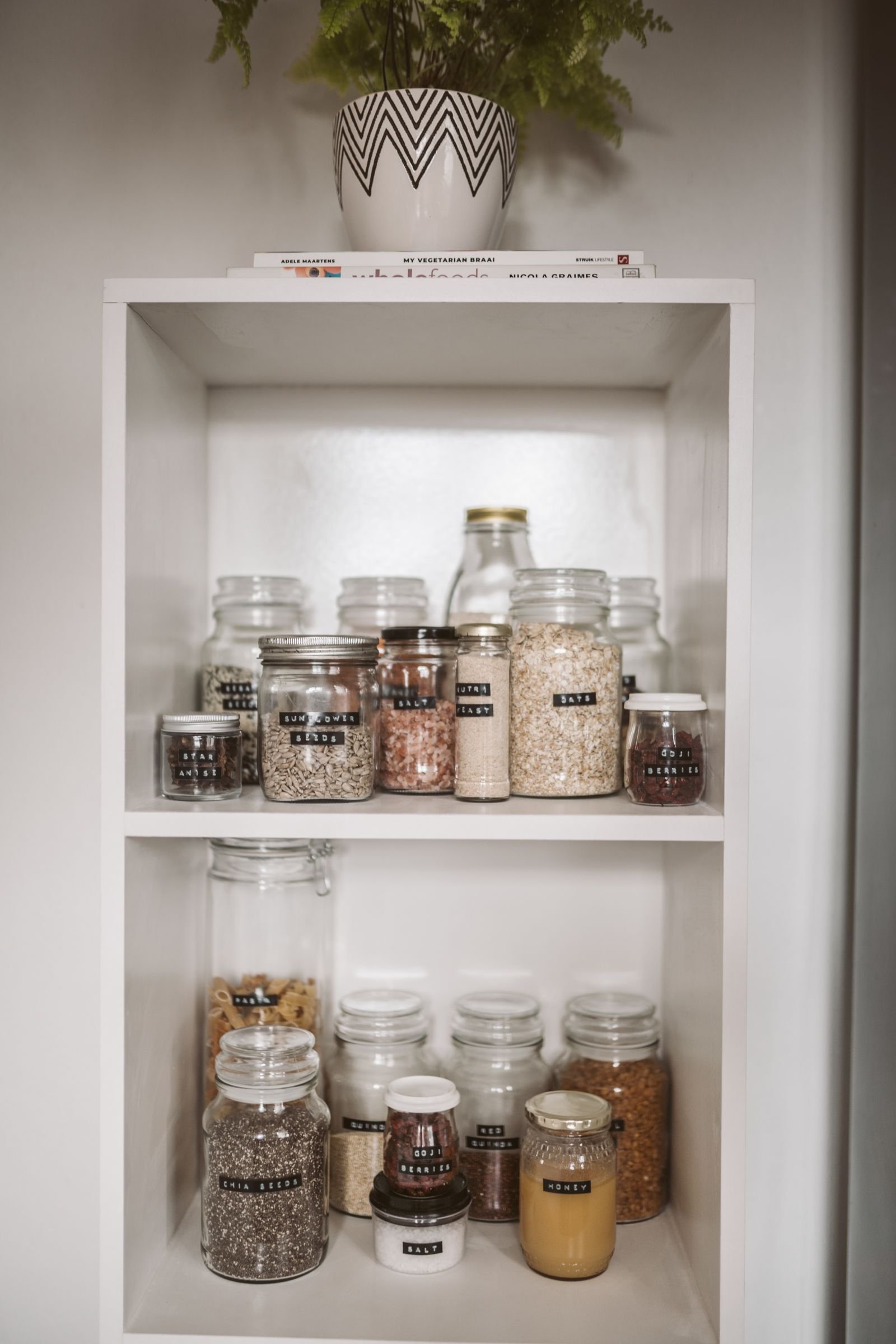 6From the photo above
Minimalist pantry labels
Waterproof, simple labels that match any container and keep the system clear for everyone in the house.
- Best for: Keeping the system clear for everyone who unpacks groceries.
- Skip it if: You swap what goes in each jar often. Wipe-off chalk labels will suit you better.
Want more ideas for a tidy small kitchen? Browse our kitchen organization posts.
Keep going
 Cozy Minimalist Living Room Ideas for Small Apartments
 12 Storage Hacks for Small Spaces (No Drilling Needed)
 How to Declutter Your Living Room in One Weekend (Checklist)