


This post contains affiliate links. As an Amazon Associate, Camidan earns from qualifying purchases, at no extra cost to you. Learn more.
It’s 7:15 p.m. You step on a squeaky toy, the treat bag is open on the counter again, and the leash is somewhere under a coat on the floor. The apartment is small, and the pet stuff seems to grow every month.
Pet clutter piles up for a simple reason: none of it has a home. This post walks through 6 storage fixes for the things dogs and cats come with, each sized for a small apartment. Tap the numbered dots on the photos to see each piece.
Quick picks
Short on time? These are the pieces that make the biggest difference.
1. Why pet stuff takes over a small apartment
Before buying anything, look at where the mess actually lands. In most small homes it’s the same three spots.
- The floor of the living room: toys, a bed and a crate all compete for the same few square feet.
- The kitchen counter: food bags, treats and bowls end up wherever there’s space.
- The door: leashes, poop bags and the lint roller have no fixed spot, so they get dropped.
The fix isn’t more stuff. It’s giving each group of things one home that’s easy to reach. If putting something away takes more than 10 seconds, it won’t happen on a busy evening.
Here’s the honest part: you can’t hide everything. A dog bed will always take up floor space. The goal is that the pet’s things look like they belong, instead of looking like they’re everywhere.
2. Make the crate do double duty
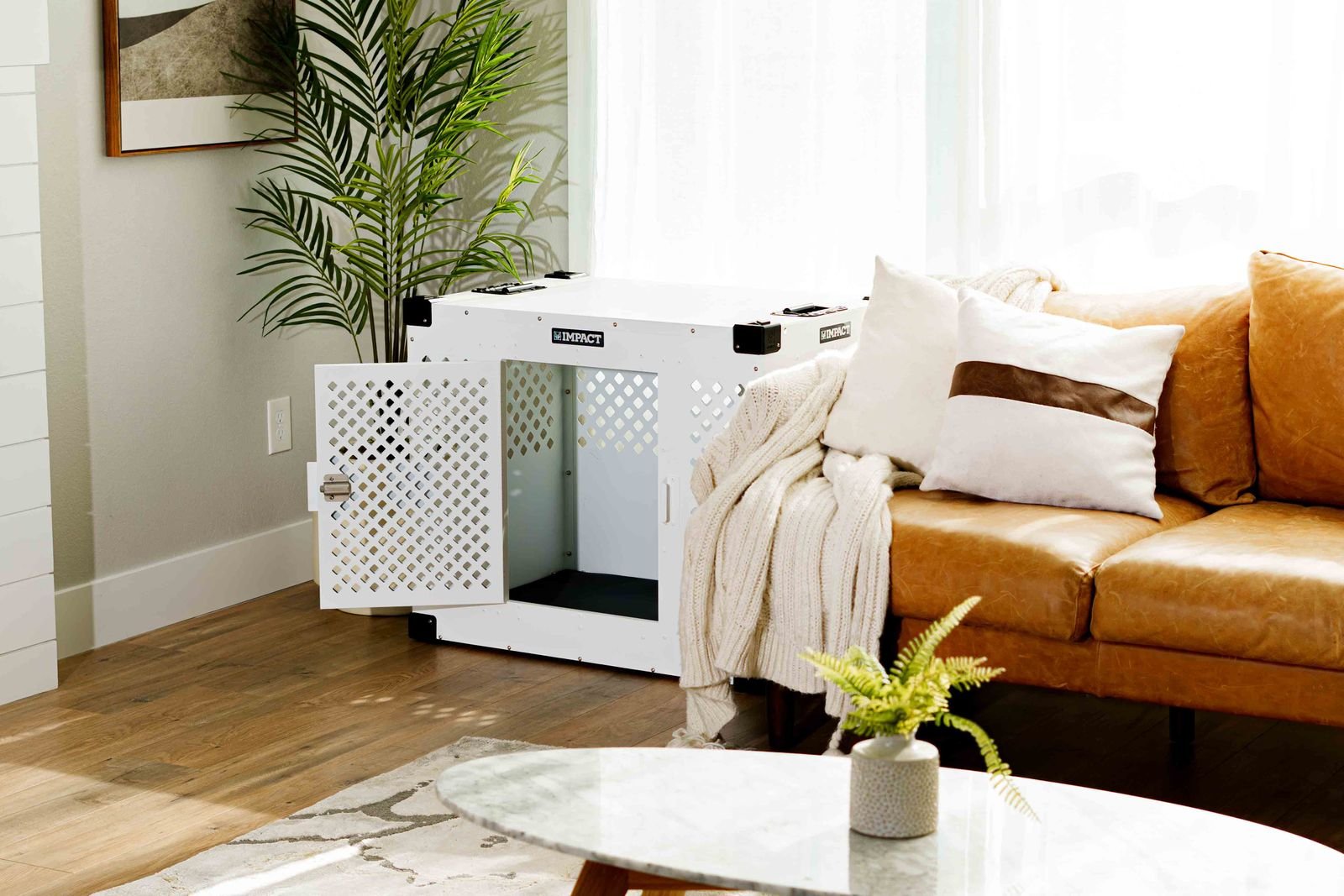
A wire crate is one of the biggest objects in a small apartment, and it doesn’t look like furniture. A furniture-style crate works as an end table or TV stand, so the space it takes up does two jobs.
1. A furniture-style dog crate
Look for a top that can hold a lamp or a plant and a door that latches firmly. Size it the same way you would a regular crate: the dog should be able to stand up and turn around. A common rule is the dog’s length from nose to base of tail plus about 4 inches.
Skip it if your dog is a heavy chewer or still in training. Wood and MDF crates can get chewed, and a sturdy wire or metal crate is safer until the habit passes.
3. Give the toys one basket (and rotate them)
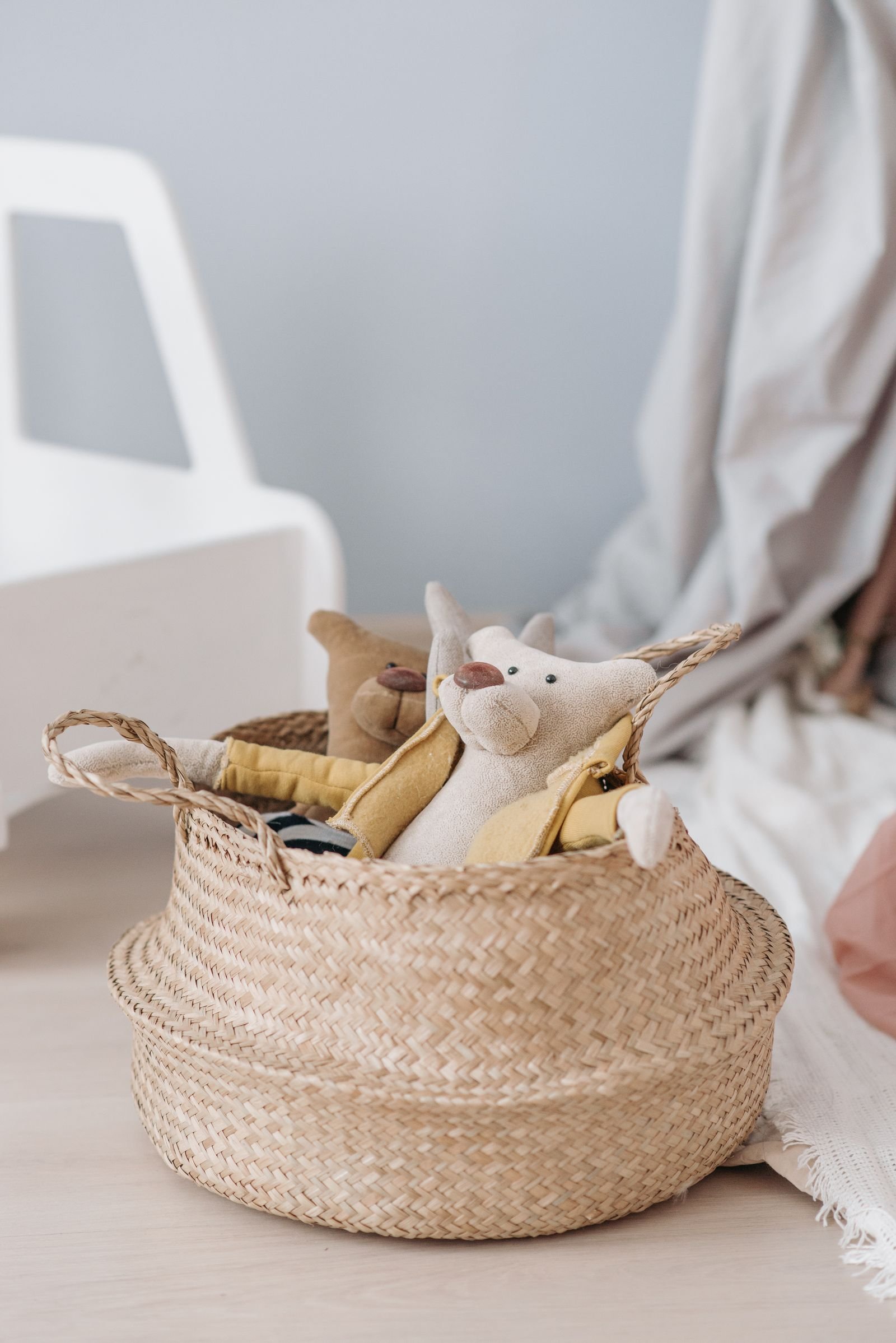
Toys spread because they live everywhere. A single basket in the living room gives them a home you can tidy in 30 seconds.
2. A woven toy basket
Pick an open basket with no lid so the dog can grab a toy without help. Some dogs even learn to drop toys back in. Woven seagrass or cotton rope baskets look like normal decor, which matters when the basket sits next to your sofa.
A toy rotation keeps the basket from overflowing:
- Keep 5 or 6 toys in the basket.
- Put the rest in a closed bin in a closet.
- Swap them once a week. Old toys feel new again, and the basket never overflows.
4. Get food and treats off the counter
Open kibble bags are a magnet for ants and curious pets, and they take up more space than they need to. An airtight container fixes both problems.
3. An airtight food container
Size the container to the bag you usually buy. Dry kibble is roughly 4 cups per pound, so a 30-pound bag holds about 120 cups. That’s around 30 quarts, or 7.5 gallons. Many people keep the food in its original bag inside the container, which keeps the batch info handy.
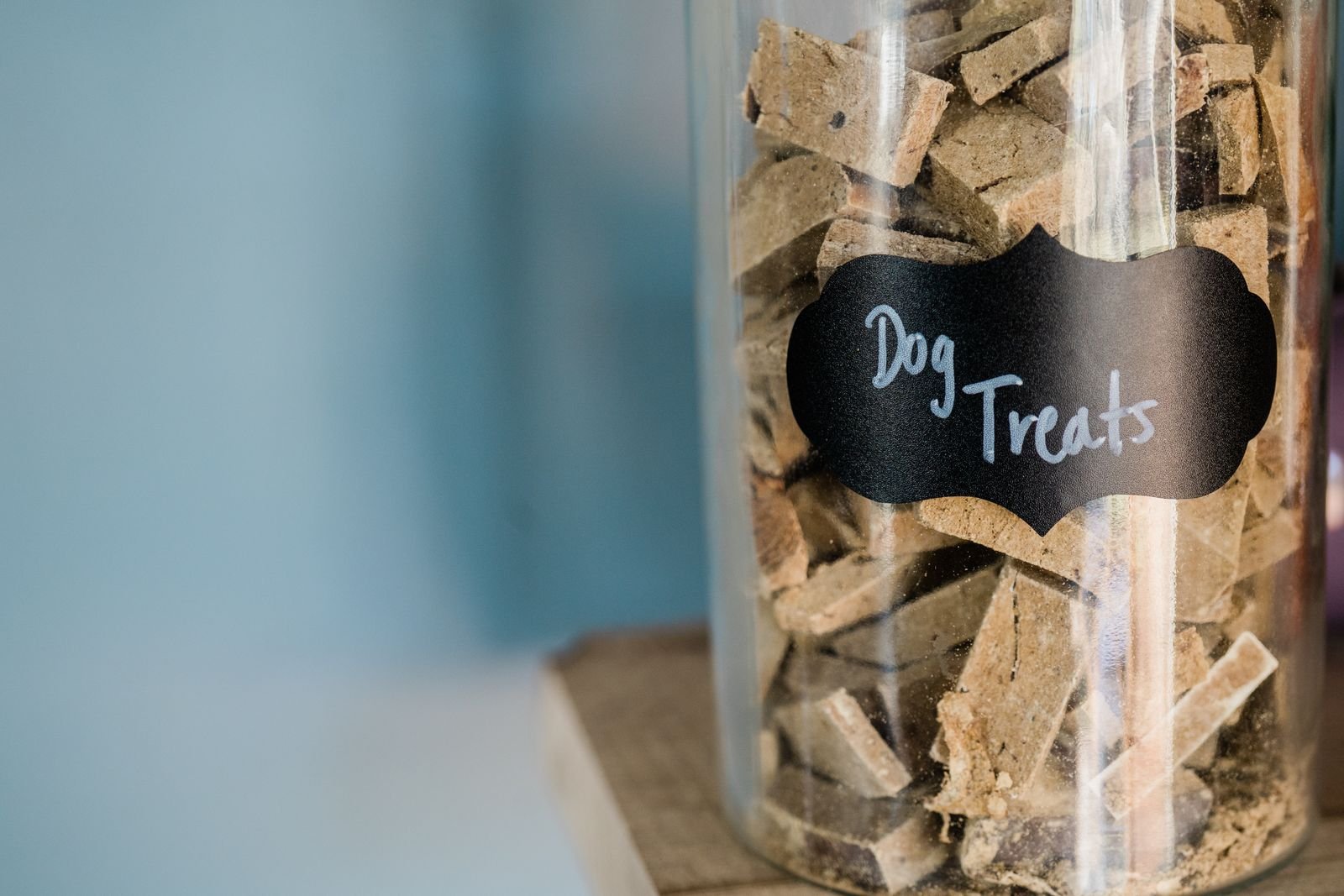
A slim, rolling bin can slide into the gap beside the fridge. Treats go in a smaller jar on a shelf, where you can reach them but the pet can’t.
Tip: label the container with the date you opened the bag. It takes 5 seconds and helps you finish older food first.
5. For cats, use the walls
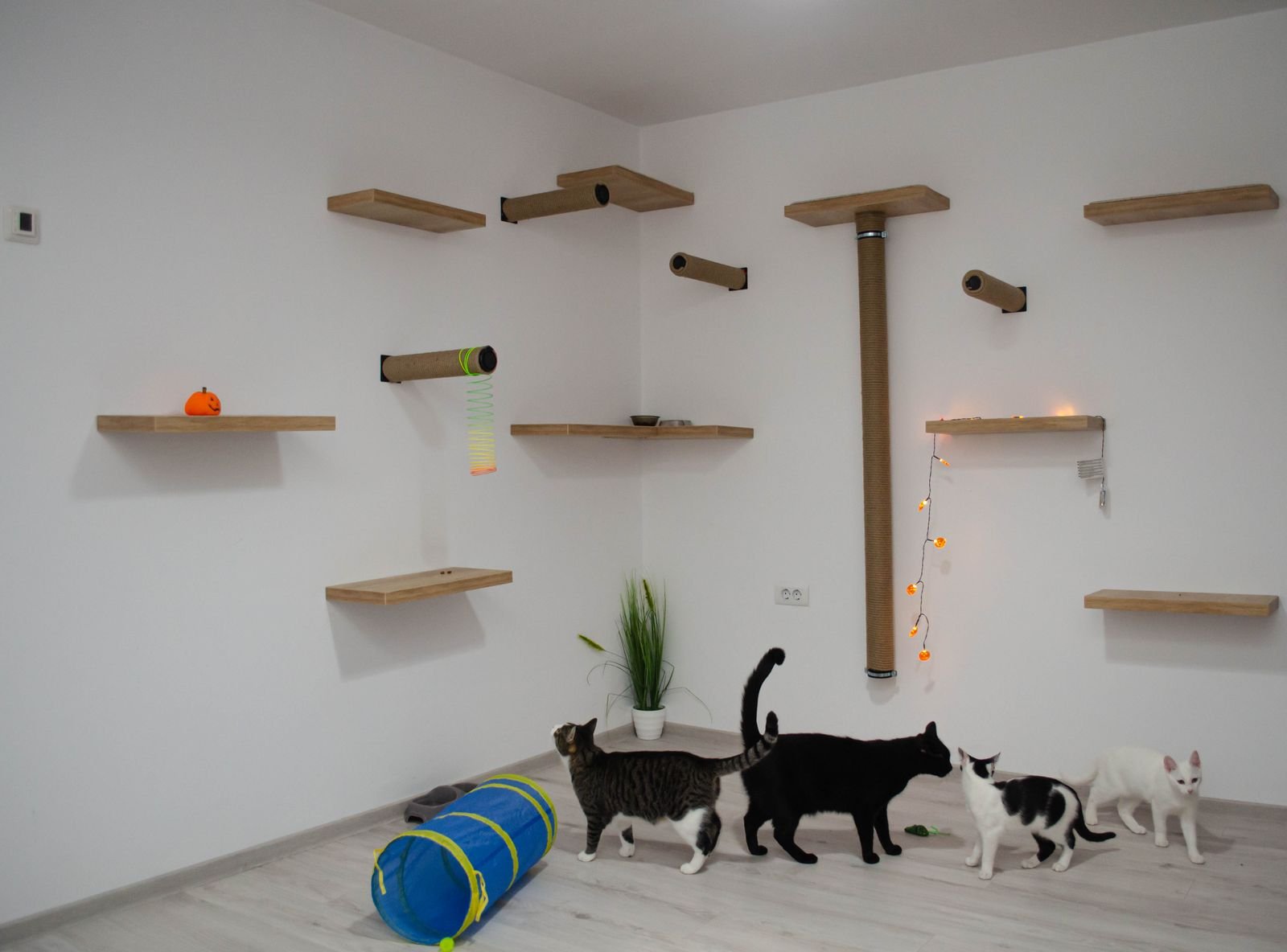
Cats like height, and small apartments have more wall space than floor space. Wall shelves give a cat its own route around the room without taking any floor at all.
4. Wall-mounted cat shelves
Start with 3 or 4 shelves placed like stairs, about 12 to 18 inches apart, so the cat can step up instead of leaping. A shelf with a soft pad at the top becomes a favorite napping spot.
Skip it if you can’t drill. Cat shelves need screws into studs to hold a jumping cat, so check your lease first. A tall cat tree by a window is the no-drill alternative.
5. A wall-mounted cat hammock
A hammock-style perch gives a cat a soft, slightly sunken bed up on the wall. It takes no floor space at all, and many cats prefer it to a bed on the ground because they can watch the room from above.
Place it near a window if you can, and check the weight limit. A sturdy model should hold at least 20 pounds, so it stays steady when the cat jumps in. Like the shelves, it needs screws in the wall.
6. Set up a grab-and-go spot by the door (do this today)
Most walks start with a search for the leash. A small station by the door fixes that, and it takes about 15 minutes to set up.
6. A lint roller that lives by the door
Pet hair on your clothes is the last thing you notice before leaving. Keep a refillable lint roller right by the door, next to the leash, so a 20-second roll happens every time.
Your 15-minute setup:
- Clear one spot near the door: a hook, a small tray or a basket on a shelf (5 minutes).
- Put the leash, harness and poop bags there (3 minutes).
- Add the lint roller and a few treats in a small jar (2 minutes).
- Move everything else pet-related that’s by the door to the toy basket or the closet (5 minutes).
Tomorrow morning, you’ll know exactly where everything is. That alone makes the apartment feel bigger.
Shop the storage: similar finds we picked
Prices change often, so we don’t list them. Check the current price and size before you buy.
1From the photo aboveFurniture-style dog crate
Works as an end table with a top for a lamp or plant. Size it so the dog can stand and turn around.
- Best for: Small living rooms where a wire crate is an eyesore.
- Skip it if: The dog is a heavy chewer or still in crate training.
2From the photo aboveWoven toy basket
An open basket that looks like decor and lets the dog grab a toy on its own.
- Best for: Toys that spread across the whole living room.
- Skip it if: The dog chews baskets. Use a fabric bin instead.
3From the photo aboveAirtight food container
Keeps kibble fresh and away from ants. Size it to the bag you usually buy.
- Best for: Kibble bags that sit open on the counter.
- Skip it if: You buy small bags that are gone in a week.
 4From the photo above
Cat wall shelves
Steps and perches that give cats a route around the room without using floor space.
- Best for: Cats that climb, in homes with little floor space.
- Skip it if: You can’t drill into the walls. Use a tall cat tree.
 5From the photo above
Wall-mounted cat hammock
A soft hammock perch on the wall. No floor space, a great window seat for cats.
- Best for: A soft window seat up off the floor.
- Skip it if: You can’t drill, or the cat is older and doesn’t jump.
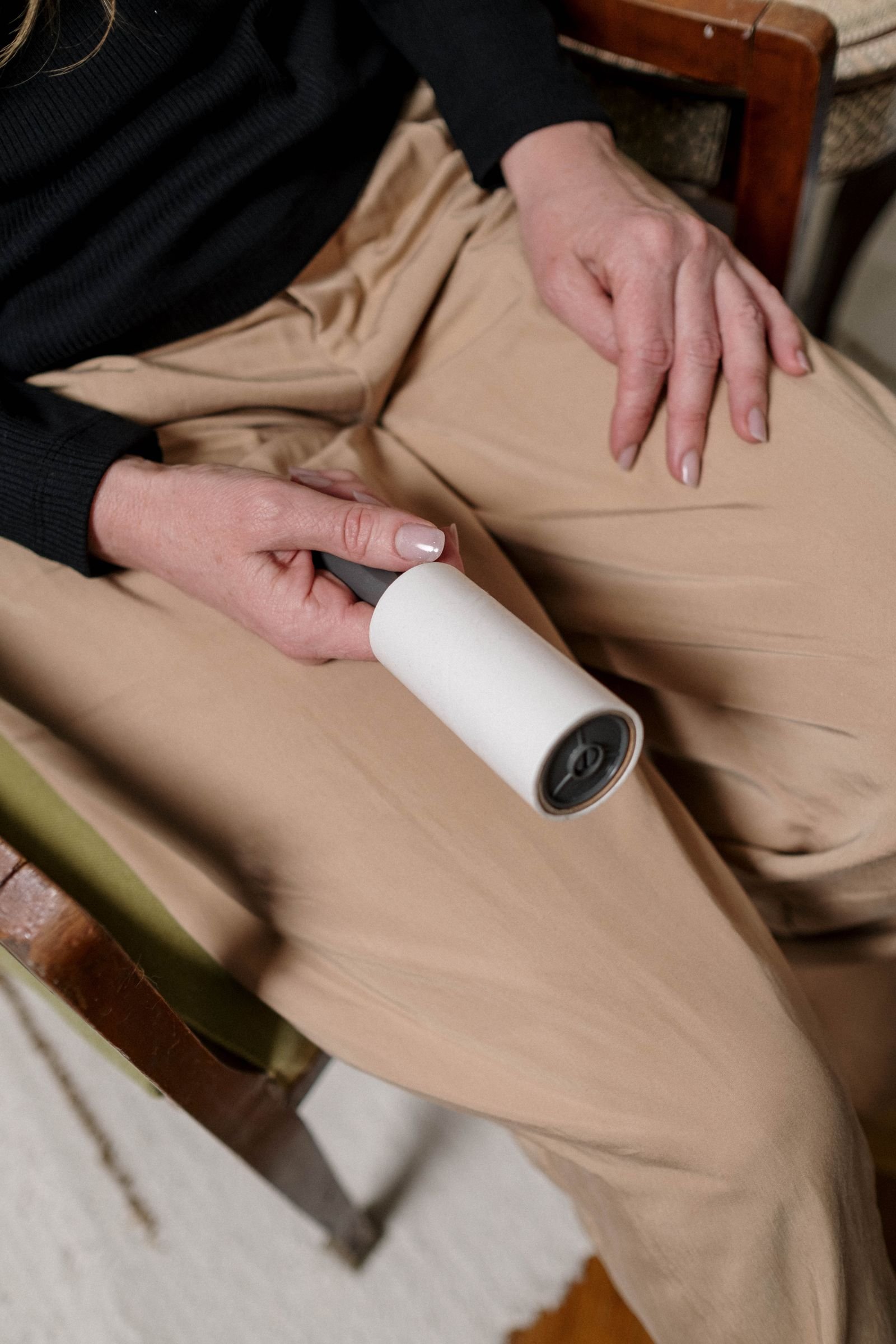 6From the photo above
Refillable lint roller
Keep one by the door for a quick roll before you head out.
- Best for: Pet hair on your clothes right before you leave.
- Skip it if: You already keep a pet hair brush by the door.
Want more ideas for life with pets in a small space? Browse all Pet-Friendly Home posts.
Keep going
Next idea →